A deck is more than just an outdoor surface; it’s a valuable extension of your home, a place for family gatherings, quiet mornings, and soaking up the beautiful Michigan summers. But the extreme seasonal shifts in Mid-Michigan, from heavy snow and ice to humid summers, can take a serious toll on even the best-built decks.
Ignoring small issues like a loose railing or a few warped boards can quickly lead to major structural problems and safety hazards. Whether your deck is showing its age with wood rot or simply needs a seasonal refresh, understanding the necessary deck repair tips is the first step in protecting your investment.
This blog, designed for homeowners across the Lansing and Mid-Michigan area, provides expert insights into identifying, addressing, and preventing common deck problems to ensure your outdoor space remains safe, beautiful, and up to code.
The Essential Deck Safety Inspection
Before any work begins, a thorough structural deck inspection is non-negotiable, especially in a region with freeze-thaw cycles. A safe deck starts with a stable foundation. You should perform a quick visual inspection monthly, but a detailed check is crucial every spring.
The Critical Areas to Inspect
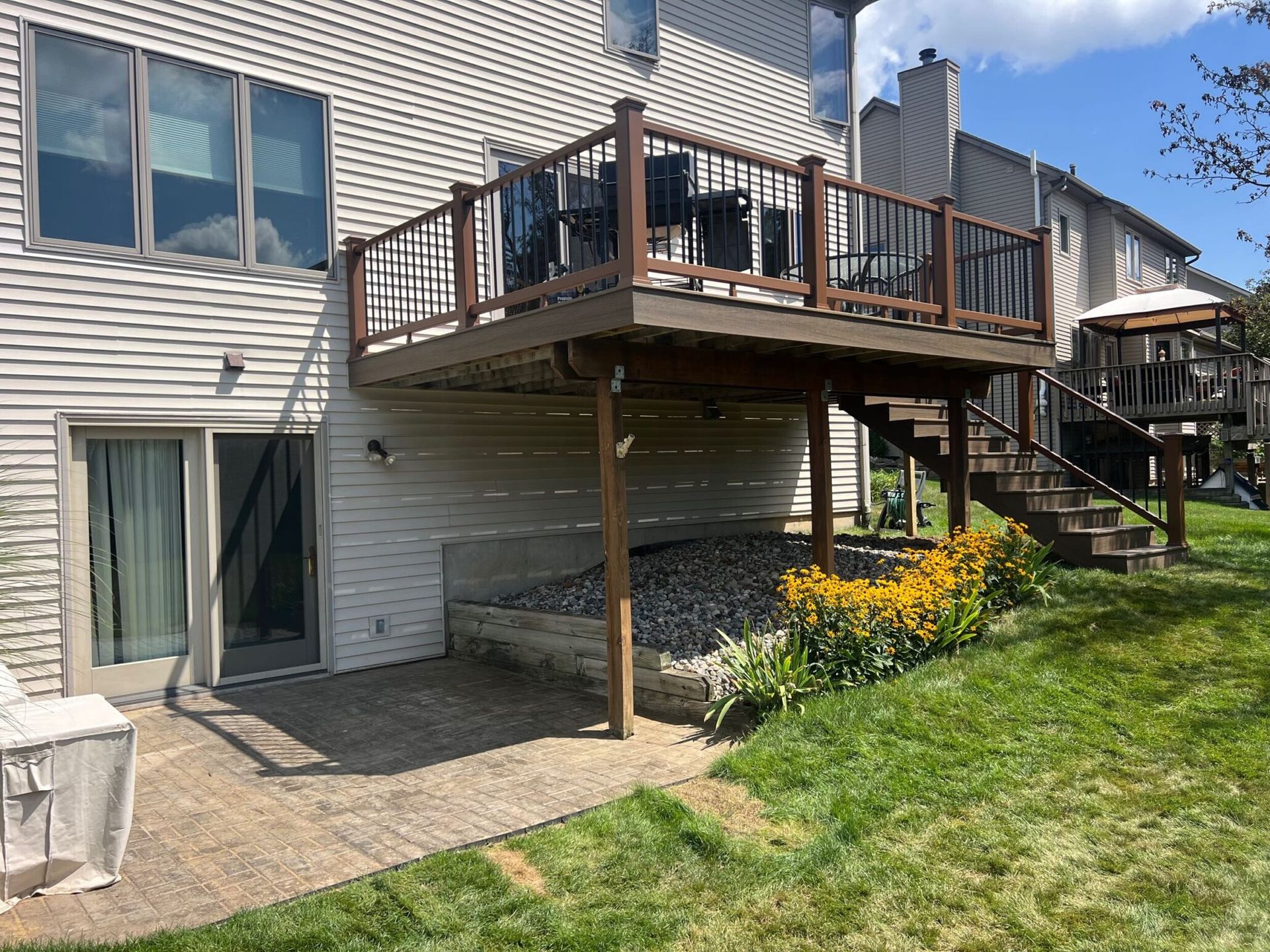
- Footings and Posts: In Mid-Michigan, the deck footings heave due to ground freezing, and thawing is a major concern. Check if the concrete footings or the base of the support posts are showing signs of movement, shifting, or are no longer level. Look for gaps between the post and the footing, or if the entire structure seems to be settling or pulling away from the house. A wobbly deck post fix may involve re-securing or stabilizing the base.
- Ledger Board: This is the board that attaches the deck directly to your house—it is arguably the most important connection. Look for signs of water infiltration where the ledger board meets the house siding. Improperly installed flashing is a prime source of wood rot at this critical connection, which can lead to catastrophic deck failure.
- Joists, Beams, and Connections: Check the structural members underneath the deck. Look for any compromised wood, especially at the ends of the joists where they sit on the main beams. Joist hangers should be secure with the proper fasteners (coated structural screws, not common nails). Look for signs of insect damage or a spongy feel, which indicates wood moisture and rot.
- Tip: Tap the wood with a screwdriver. If it feels soft or crumbles, you have wood rot and the component needs professional deck board replacement or full beam replacement.
Common Deck Problems and Expert Repair Solutions
The climate in the Lansing deck contractors’ service presents unique challenges. Here are the most frequent issues encountered during deck repair in Mid-Michigan and how to address them for maximum longevity.
Addressing Warped and Rotted Deck Boards
Cracked, splintered, or warped deck boards are the most visible sign of wear and tear and a significant tripping hazard.
- Isolate the Damage: For minor cracks and splinters, sanding and re-sealing might suffice. For boards with deep cracks or a spongy feel (indicating wood rot repair in Michigan), full deck board replacement is necessary.
- Removal and Replacement: Carefully remove the damaged board, ensuring the underlying joists are sound. Use lumber of the same size and material (e.g., pressure-treated wood, cedar, or composite deck repair material). Always use deck screws, not nails, as screws provide far superior holding power, especially against the freeze-thaw cycle.
- Composite Repair Nuances: While composite materials resist rot, they can still suffer from fading, staining, or thermal expansion/contraction. Composite deck repair often involves replacing entire sections or boards, which requires specialized tools and knowledge to match colors and maintain proper gapping.
Advanced Wood Rot Prevention and Remediation
Wood rot is a fungal infection that attacks wood when the moisture content is consistently above 20%.
- Stop the Water: Identify the source. Is it a leaky gutter? Bad flashing on the ledger? Water pooling near the footings? Repairing the source is the first step in
deck restoration services.
- Ventilation: Ensure there is adequate airflow beneath the deck. Lack of ventilation traps moisture, creating an ideal environment for rot. Trimming surrounding shrubs and ensuring the perimeter isn’t sealed off can help.
- Chemical Treatment: After cutting out and replacing rotted sections, a professional will often apply a copper-based preservative to the remaining structural members to provide maximum protection against future decay.
Stabilizing Posts and Footings for Wobbly Decks
The structural foundation is everything. If the deck feels shaky when you walk on it, it’s a structural hazard requiring immediate intervention.
- Understanding Frost Heave: The 42-inch frost line is a minimum requirement. If the footings were placed too shallow, the only long-term fix for deck footings heave repair is to install new footings that go deeper than the local code requires or to use specialized helical piles.
- Securing Posts: A proper wobbly deck post fix means addressing the connection at both the top (where the beam rests) and the bottom (at the footing). Code often requires metal connectors at the post-to-beam joint, ensuring the load is transferred safely and the joint is resistant to uplift.
Preventative Deck Maintenance Tips
An ounce of prevention is worth a pound of deck repair. Regular, proactive deck maintenance tips are the best way to extend the life of your deck and preserve its aesthetic appeal.
Seasonal Cleaning and Sealing
The Michigan weather demands routine protection for wood decks.
- Annual Deep Clean: Use a specialized, oxygen-bleach-based deck cleaner to remove mildew, algae, and dirt. A light power wash can be effective, but too much pressure can permanently damage wood fibers.
- Stain and Seal: Every 2-4 years, apply a high-quality, water-repellent stain or sealant. This protective layer is the shield, preventing water absorption that leads to wood rot and minimizing the sun’s UV damage that causes fading and splitting. This process is a key part of effective deck restoration services.
Ensuring Proper Drainage and Ventilation
Decks need to breathe! Stagnant moisture is the enemy of wood and the primary fuel for deck problems.
- Clear Debris: Regularly remove leaves, pine needles, and debris from between deck boards and the gaps on the railing. This prevents moisture and organic material from collecting and accelerating decay.
- Check Gutters: Ensure your home’s gutters and downspouts direct water away from the deck structure and deck footings. Consistent splashing water near the deck is a primary cause of erosion and moisture saturation.
The Value of a Professional Structural Deck Inspection
DIY maintenance is helpful, but the underlying structural integrity requires the eye of an expert. A reputable, licensed Lansing deck contractor can spot issues that an untrained eye might miss. They will check for critical connections, hardware corrosion, and ensure everything meets current Michigan residential building codes, especially after years of enduring the tough deck repair conditions.
When to Choose Deck Restoration vs. Full Replacement
Deciding between a full deck restoration project and a complete replacement is the most crucial decision a homeowner faces. The key is to assess the condition of the structural skeleton.
- Restoration is Ideal When: The decking surface, stairs, and railings are showing wear (e.g., loose, warped, faded), but the main supports (footings, posts, beams, and ledger board) are sound. A restoration involves replacing boards, sanding, and staining, significantly extending the life of the structure at a lower cost.
- Replacement is Necessary When: The primary structural supports are compromised. If more than 50% of the joists, beams, and support posts show severe rot, insect damage, or structural instability (due to poor deck footings, heave repair, or a rotted ledger), replacement is safer and more cost-effective. The Michigan Residential Code is strict on structural safety, and replacing a compromised frame ensures compliance and maximum safety for decades to come.
Trusting Your Mid-Michigan Home Improvement Partner
Maintaining a safe, beautiful deck requires consistent care and, eventually, the help of a local professional who understands the unique climate challenges of Mid-Michigan. For over 40 years, Brunette Home Improvement, established right here in Lansing, Michigan, in 1982 by Mark Brunette, has built a legacy of trust and quality in deck construction and expert deck repair.
Our commitment to Experience, Expertise, and Trustworthiness is founded on decades of hands-on work as a family-owned and operated company and is backed by credentials like an A+ rating with the Better Business Bureau and membership in the Greater Lansing Home Builders Association. We use this unparalleled local knowledge to solve the most challenging deck problems, ensuring every repair, from a simple deck board replacement to complex structural deck inspection and reinforcement, meets the highest standards of safety and craftsmanship.
Don’t let a small issue turn into a dangerous hazard. Contact Brunette Home Improvement today for a thorough deck safety inspection and a free, professional estimate on deck repair in Mid-Michigan. Let our four decades of proven expertise restore the safety and beauty of your outdoor living space.